Center for Lyme Action's Virtual Advocacy Day highlights the urgent need for increased federal funding for Lyme disease, with advocates sharing impactful stories to drive meaningful policy change.
If you haven’t already heard the buzz, the Center for Lyme Action (CLA) held the 2026 Virtual Advocacy Day on February 18th, helping to raise federal funding for Lyme and other tick-borne disease. CLA is a 501(c)(4) dedicated to growing this funding for Lyme, Alpha-Gal, and other tick-borne disease in an effort to find a cure, particularly for patients with persistent symptoms. Founded in 2019, CLA’s designation as a 501(c)(4) nonprofit allows the organization to have unlimited lobbying activities.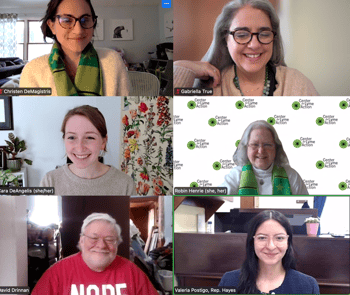
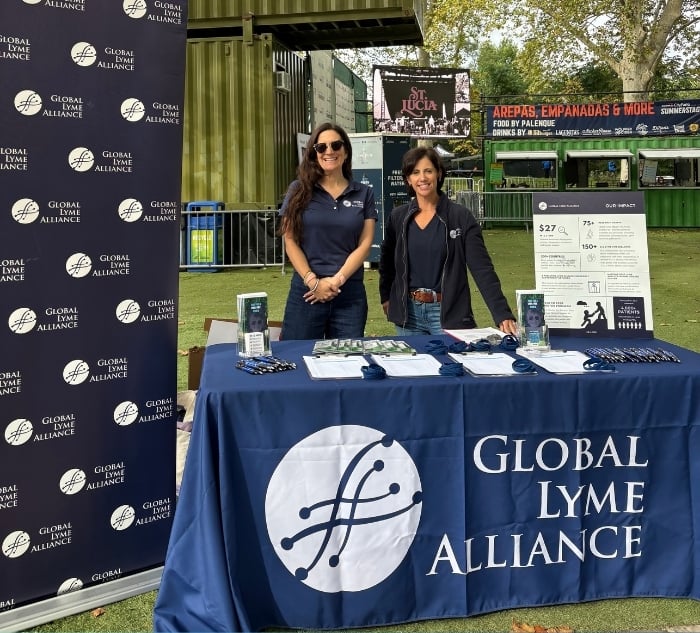
That lobbying was on full display during Advocacy Day, when advocates—including patients, healthcare providers, caregivers, researchers, and Global Lyme Alliance ambassadors—met with members of Congress to discuss the need for increased federal funding for Lyme and other tick-borne illness. For the second year in a row, there was representation from all 50 states, D.C., and Puerto Rico, with more than 500 people in attendance. Through over 370 virtual meetings, members of Congress got to hear directly from their constituents how Lyme and tick-borne illness impact lives and what needs to be done about it. Having people from all over the country “really illustrates that this is not a rare or regional issue,” says CLA’s Executive Director Meghan Bradshaw. The Virtual Advocacy Day “helps lawmakers to understand how their communities are impacted by these issues and it motivates them to do something about it.”
Bradshaw notes that when CLA first began Advocacy Day, the goal was to educate lawmakers about tick-borne illness and raise awareness that it’s an issue. Now, she notes, more and more lawmakers understand the issue—whether through personal experience or increased awareness from advocacy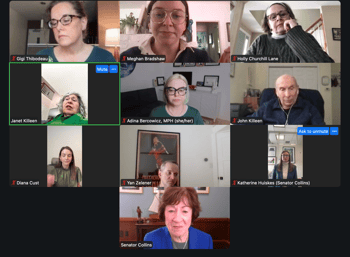 efforts—so their response has shifted to “we understand this is a problem, and what can we do to help?” As Kristen Harris, GLA Education and Grant Program Manager notes, “One of my biggest takeaways from the Virtual Advocacy Day with CLA was that many members of Congress and their staff were already aware of Lyme and tick-borne diseases and the urgent need for funding. That awareness gives me hope that the voices of patients are being heard, and expanding critical research support is truly possible. Meaningful change today will help build a better future for the next generation of Lyme disease patients.”
To date, CLA and its supporters—including GLA—have helped grow federal funding for Lyme and other tick-borne illness by over $500M. “When we started, we were getting around $59M a year. This past year in the FY26 appropriation cycle, we had about $170M allocated. So, we have tripled the impact,” says Bradshaw.
This year’s specific asks were for five appropriations requests, such as one to fund CDC Lyme and tick-borne disease programs, which will help support implementation of the Kay Hagan Tick Act; federal funding for the public implementation of the public-private partnership for LymeX with the Steven and Alexandra Cohen Foundation; and funding for the NIH Lyme and tick-borne disease portfolio to improve diagnostic and therapeutic research (see a full list of the requests). “There’s a discrepancy that we try to illustrate for these offices,” Bradshaw says. “The NIH Lyme disease funding on average gives $103 per Lyme patient—and this is with nearly half a million cases every year—whereas there are far less common vector-borne diseases in the United States like West Nile virus and malaria that get between 100 and 1,000 times more funding on a per-patient basis.”
CLA is not alone in the fight for more funding. GLA has become a member of CLA to support CLA’s efforts and collaborate on shared initiatives that advance the call for greater federal investment in Lyme 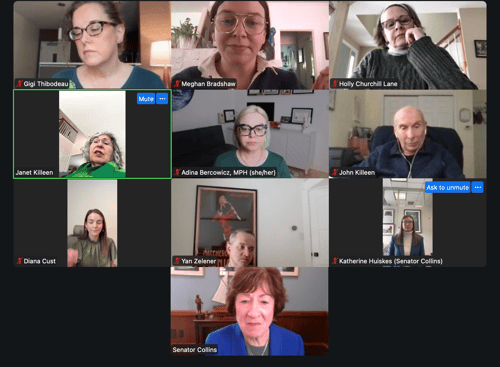 disease research, diagnostics, and treatment. Says GLA COO Jennifer Katritos, “By bringing GLA’s scientific credibility and patient community alongside CLA’s legislative advocacy and government access, our collaboration aims to drive meaningful policy change for the nearly half a million Americans diagnosed with Lyme disease each year.”
Bradshaw makes clear that this work simply could not be done without a network of over 10,000 advocates, many of whom are connected to GLA. For Advocacy Day, advocates were trained to pitch the specific funding requests and also were offered training to share their own stories in a concise, effective way. GLA Director of Research Dr. Cara DeAngelis says, “This was my first Advocacy Day, and I was struck by how many patients dedicated an entire day to sharing their stories with such courage and vulnerability. Their voices highlight the urgent need for increased federal investment in Lyme and tick-borne disease research through key agencies and programs. Global Lyme Alliance supports early-stage research that helps investigators position themselves for future federal funding, and Advocacy Day gave me a firsthand look at how the patient voice and organized advocacy can shape federal research investment.”
Despite actively battling Lyme and other tick-borne illness, patients passionately raised their voices to participate in Advocacy Day. Lyme patient and CLA Team Lead for Massachusetts Colleen Cosgrove reflects, “Center for Lyme Action makes advocacy so accessible to a population of patients of which many are actively sick and in treatment, like me who had my weekly IVIG infusion that day before and was still recovering. Being able to witness patients and caregivers speak the truth of their journey with Lyme and tick-borne illness and find their voice they lost along the way was an incredibly moving moment to witness for me. The common threads in our story of not being believed by doctors, delayed diagnosis/misdiagnosis, and significant financial burdens that were shared with legislators on Advocacy Day shined a bright light on the need for funding and I am so hopeful that day will come for our resilient community.”
Advocacy Day was just one way to get involved in CLA’s mission. If you would like to add your voice to the cause, you can fill out an easy form to help urge congress to support FY27 Lyme and Tick-Borne Disease Funding, join CLA as a member, and/or subscribe to their newsletter to stay informed on events and calls to action. “To be a voice for this community means everything to me,” says GLA Ambassador Madison Lewis. “Ten years ago, when I was first diagnosed, I was lost, hopeless, confused, and lonely. I am grateful to have found a network of Lyme warriors like me to share stories and advocate for a better life for us! I’ve made it a goal of mine to get loud and not stop talking about Lyme because it is my dream for us to find a cure or affordable treatment path, so nobody must go through what I have.”
Join the network and the collective call to action!
***