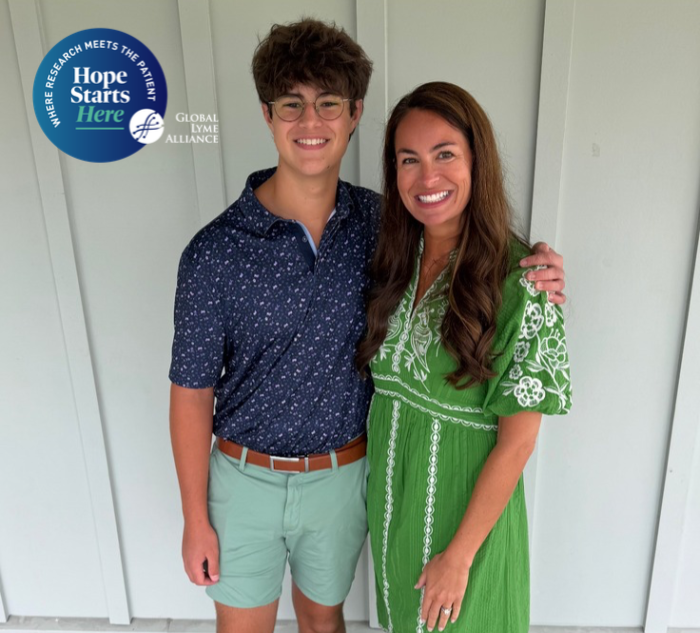
As a mother navigating and advocating for her son Whitman's diagnosis and care, Hannah Spires found strength, hope, and community through Global Lyme Alliance. Now, she's empowering other parents to turn hope into action by supporting GLA.
In the summer of 2020, my son Whitman was bitten by a tick in South Carolina. We didn't think much of it, and neither did our doctors. Around that same time, we discovered toxic mold in our home after a new roof had been installed incorrectly. It made all of us sick, with headaches, inflammation, and more. We tore out the entire upstairs, roof included, down to the studs. Furniture, toys, books, luggage, even family photographs were thrown out of the upstairs window into a dumpster. We were trying to make our home safe for our four children, and slowly, room by room, we began putting it back together.

In November, on the day the vanity was supposed to be installed in the boys' new bathroom, Whitman, who was nine, developed a stomachache. Within hours, he needed an emergency appendectomy. We expected him to recover and return to the ordinary business of being a little boy, but he didn't. Instead, we began a six-month search for answers.
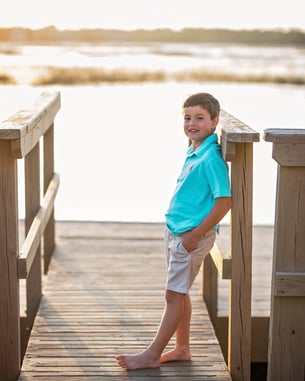 Before that November, Whitman was a child who never wanted to miss a thing. We called him Whitman the Rascal, not because he was naughty but because he had to be in the middle of the action. He loved the smell of coffee and making pancakes, and he would bounce down the hallway singing, "Rise and shine and give God the glory, glory!" so everyone would know breakfast was ready. He rode his bike down the driveway, raced his brothers across the pool, and joined every Nerf war in the backyard. He was an avid reader who finished the entire Harry Potter series in record time. His grandmother, MiMi, called him her life-is-good kid.
As the months passed, I watched the medical system fail my son. His health continued to deteriorate. He lost the ability to visually track words across a page. Eventually, he could no longer walk independently. His pain was relentless, and there were days when he vomited almost constantly. We went from one specialist to another, hoping someone could explain what was happening to our son.
Some physicians compassionately admitted, "I believe you, but I don't know how to help." Others suggested his symptoms were psychological, in ways that left us feeling Whitman's suffering was being dismissed. One doctor questioned whether he was really sick after watching him struggle to take a few painful steps. A nurse who witnessed the exchange leaned down beside him and whispered, "I believe you, Whitman." I will never forget her. I wasn't asking every physician to have the answer. I was asking them to recognize that not having an answer didn't mean there wasn't one.
In May of 2021, after turning to integrative medicine, we finally had a diagnosis: Lyme disease and other tick-borne infections. I thought naming the illness meant we could begin fixing what was wrong. Instead, we encountered conflicting medical opinions, unanswered questions, and expensive care that insurance often wouldn't cover. We had spent thousands of dollars just trying to understand what was happening to our child. Now we had to figure out how to help him.
I quickly understood that connecting the pieces rested with me. I became Whitman's doctor, charge nurse, medical researcher, case manager, care coordinator, and advocate. I studied anatomy for the first time, tracing the eye through the optic nerve and into the brain, trying to understand why my son could no longer read or walk as he once had. I spent nights reading medical literature, comparing findings, and looking for something that might have been overlooked. I wasn't qualified to make the decisions I was being asked to make, but I couldn't bear the thought of missing something that might help him.
In the spring of 2022, while researching Lyme disease and vision, I came across comments on Facebook that led me to Dr. William Padula, a pioneer in neuro-optometry. I found his website and watched a video featuring Marisol Thomas and her experience with vision rehabilitation. As I listened to her story, I recognized some of the same difficulties we had been seeing in Whitman but had struggled to explain. Marisol had also been honored at a Global Lyme Alliance gala, a connection I would come to appreciate later.
We subsequently took Whitman to see Dr. Padula, and that visit became a turning point in his care. He examined Whitman's visual difficulties in relation to his balance, movement, and ability to function. For the first time, we were beginning to understand a part of his illness that had gone largely unexplored. Rehabilitation took time and hard work. It wasn't a cure for everything Whitman was experiencing, but we began to see progress. New glasses helped him stand taller and take steps without falling, and the first time he wore them, the room stopped spinning for him.
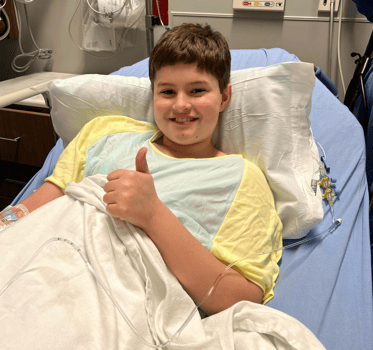 We were also fortunate to find extraordinary doctors who believed Whitman and worked tirelessly to address his medical needs. His treatment was extensive, and included the use of a PICC line. These physicians, along with the nurses and therapists who cared for him, became an essential part of his journey. There was no single answer to everything Whitman was experiencing, and treating these issues required more than one kind of care.
Through all of this, my husband, Chris, and I were still raising three other children. I owned a small boutique, but I stopped going into the shop. Chris kept working and somehow managed all the things I no longer had the capacity to think about. He carried so much of our family while I was trying to get Whitman well.
So much of our lives had come to a screeching halt, and we had to work to make the parts that continued happen. Between physical therapy, occupational therapy, pelvic floor therapy, counseling, surgeries, and hospital visits, we went to basketball games, spelling bees, weddings, and funerals. We carved pumpkins, stuffed Christmas stockings, hunted Easter eggs, arranged horseback lessons, showed up at sporting events, read bedtime stories, and built pillow forts. Somehow, every child except Whitman managed to break a bone along the way. We were trying to preserve the childhoods of our other children while fighting for the health of one.
One afternoon, our five-year-old daughter, Sarah Jane, begged for a tea party. I made little treats, and Chris and I sat down with her over tea and hot cocoa. In the next room, Whitman was vomiting as many as forty times an hour and groaning in pain. We wanted Sarah Jane to have an afternoon that belonged to her, even while her brother was suffering just beyond the doorway.
Joy and sorrow weren't taking turns. They were happening in the same house, sometimes in the very same moment.
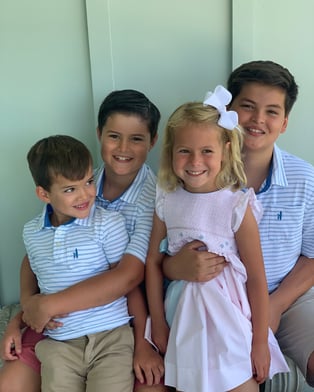 We have an extraordinary community: family and friends who show up, pray for us, bring meals, care for our children, and help us through things we could never manage alone. My best friend knows the "Lyme life" because she has lived it herself. Even with all of that, there were times I didn't know how we would keep going. And despite having people who loved us, I was terribly lonely. There is a loneliness that comes with caring for a desperately sick child. I was making decisions I didn't know how to make, and after so many painful experiences, I no longer knew whom to trust. I was exhausted, frightened, and broken.
Global Lyme Alliance had been there all along, but I wasn't ready to recognize another voice as one I could trust. Too many people had spoken with certainty and had dismissed what I knew to be true about my child. Still, I kept seeing invitations to attend GLA's gala in New York City. In 2023, Whitman was on a PICC line, and I had absolutely no business dragging Chris onto a plane to attend a fancy gala. But I needed to go and be in a room with people who understood. So we went, leaving Whitman with his grandparents, and while we were in New York, he ended up in the hospital with a complication from his PICC line.
That night, I met mothers who had walked this road before me, and I met their children, now grown. These were mothers who had fought to get their children the help they needed and had watched them get better. Seeing those children gave me a glimpse of the future I so desperately wanted for Whitman. My hope had always been in God, but I was grateful to be surrounded by people who understood what we were facing. I met researchers and celebrities whose lives had also been personally affected by Lyme disease. As I listened to their stories, I realized I didn't have to explain or defend ours. For once, I wasn't the mother trying to convince someone that her child was sick. I was simply another mother among 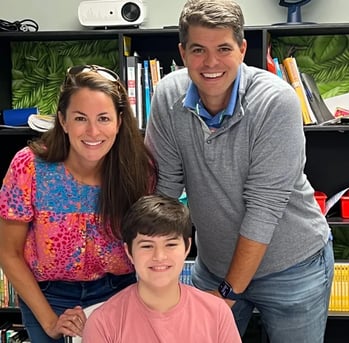 people who understood, and I wasn't alone.
In those early years, when every day seemed to bring another crisis, I had poured every ounce of myself into trying to get Whitman well. I was exhausted and, in many ways, broken. But sitting among those mothers and seeing their children beside them reminded me that there could be life beyond what we were living through. I had come to New York because I needed to be understood, but I began to realize that our family's experience could help someone else. In that room, I found my courage and my voice.
That sense of belonging is something Global Lyme Alliance works to give families every day. Its work goes far beyond an annual gala. GLA funds and drives research into Lyme and other tickborne diseases, bringing scientists together in pursuit of better diagnostic tools and treatments. It also helps patients connect with knowledgeable healthcare providers, offers education and peer support, and connects families with advocates and others who understand what they're going through. I often say, "Hope is what holds us in the waiting." Research can bring us closer to better answers, but while we wait, we need a community to lean on.
I think about how badly I needed to be in that room in New York. Chris continued working while I cared for Whitman, and our family and friends made so much else possible. They cared for our other children, brought meals, contributed toward medical expenses, and helped us travel in search of answers. We were able to keep going because people kept showing up for us. Even then, there were times I didn't know how we would manage the next step. I think about the families who cannot afford to take another day off work, who have no one to help with their children, or who simply cannot pay for another appointment. What happens when they have nowhere else to turn?
A year after attending my first GLA gala, I joined its board of directors. I had spent years learning things I never expected to know, asking questions I never imagined having to ask, and fighting for my child to be heard. I couldn't change what our family had endured, but I could use what I had learned to help others. I wanted to support the research that could give families answers sooner, along with the programs that help patients find care, information, and people who understand. I wanted the next mother who felt as lost and alone as I had to know there were people ready to listen. 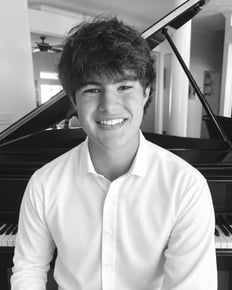
Whitman has made incredible progress, and I am forever grateful for the extraordinary doctors, nurses, and therapists who have helped him. Looking at him now, you would never know the suffering he endured. But I know. The images and sounds of those years are etched in our minds, and I will carry them for the rest of my life. I also remember the little boy racing his brothers across the pool, devouring Harry Potter books, and singing through the house to announce breakfast. There are years of his childhood I cannot give him back, and I will always wish we'd had better, faster access to providers who recognized how urgently he needed care.
When I first walked into that gala, I was a mother who desperately needed to be understood. Today, I have the opportunity to be there for mothers who are still searching. I never wanted to become my son's doctor. I just wanted to be his mom. And I want the families coming after ours to have the answers and care they need to spend less time fighting to be heard and more time healing.
***
The above material is provided for information purposes only. The material (a) is not nor should be considered, or used as a substitute for, medical advice, diagnosis, or treatment, nor (b) does it necessarily represent endorsement by or an official position of Global Lyme Alliance, Inc. or any of its directors, officers, advisors or volunteers. Advice on the testing, treatment or care of an individual patient should be obtained through consultation with a physician who has examined that patient or is familiar with that patient’s medical history.